
cluster
UX DESIGN
UX RESEARCH
SERVICE DESIGN
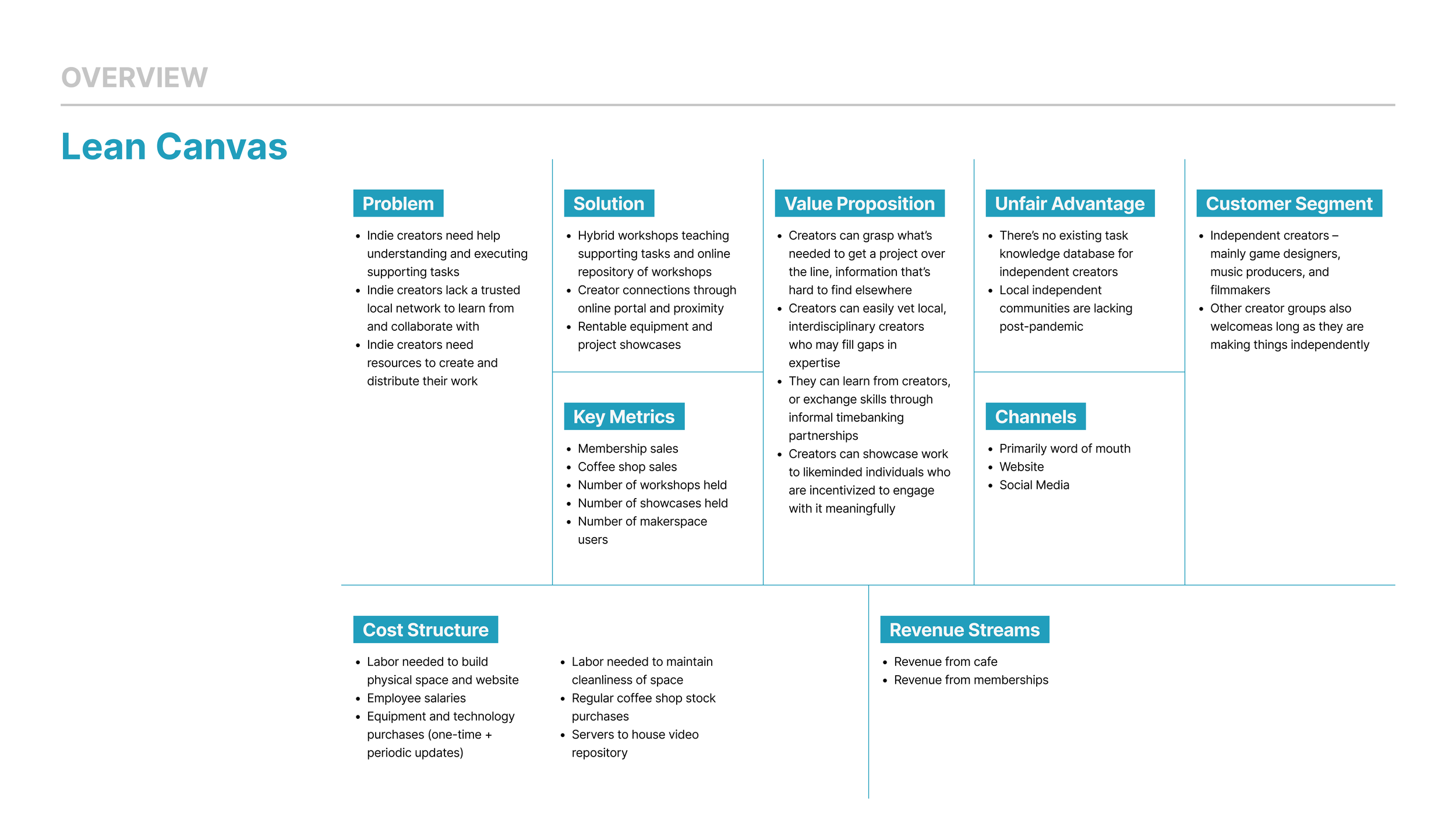
Cluster is a combined cafe and makerspace designed for independent creators to connect and learn from one another. The physical space is supported by digital interactions and remote content via the Cluster website.
This was my HCI Master’s Capstone project from the University of Washington.
Role
Responsibilities
Designer, Researcher, Project Manager
TEAM
1 Other Designer
Timeline
Feb 2022 – Aug 2022 (6 months)
advisor
Pacific Northwest National Lab
User Interviews and Insights, Ideating, Sketching and Prototyping, Rapid User Testing, User Flows, Information Architecture, Design Specifications
FINAL solution
Cluster is a combined cafe and makerspace designed for independent creators to connect and learn from one another. It’s a place where members can build community, gain new skills, and get things done in a way that wasn’t previously afforded to them.
Cluster is a space comprised of like-minded individuals willing to help one another get their projects over the line. Connect with people in your creative domain via the connector tool on our website, or simply say hello when you see folks in the space!
Cluster organizes member-run workshops to help creators with all types of tasks, from distribution of your work to establishing an LLC. And if you miss a workshop, don’t sweat it! All events are recorded, timestamped, and stored in a digital repository for easy review.

Cluster offers quality equipment and workspace rentals to help you access the tools you need for your project. And once it’s done, help us help you celebrate it by hosting a screening, playtest, or listening party!

Build Community
GAIN NEW SKILLS
get stuff done
The Problem
How do humans create in a world that does not reward creativity?
Artistic expression is a critical element of our human experience and it requires time and resources. But time and resources are unequally distributed. Creators who aren’t backed by major studios or publishers–specifically, independent creators such as game designers, filmmakers, and music producers–typically operate with significantly less economic and social capital. They have to wear many hats to realize their projects, which often involves working on supporting tasks that exist outside of their core creative work.
Image source: http://filmmakers412.com/scott-danzig-director-producer/
Research Process
Research OBJECTIVE
How do independent creators (specifically game developers, music producers, and filmmakers) working solo or on small teams manage supporting tasks?
Research QUESTIONS
What are the tasks that have little to do with their core creative work that they must engage in to support their work?
How do they navigate these tasks when they arise?
What are the barriers to accomplishing these tasks?
What supports them in accomplishing these tasks?
Research Methods
7 In-Depth Interviews to glean the every day experiences creators have including their struggles and strategies
3 Subject Matter Expert Interviews to gain a high-level understanding of the creative landscape in order to contextualize participant findings
7 Mapping Activities to systematically identify the top supporting tasks, as well as comprehend tools used, people involved, third parties engaged, and success metrics
4 Photo Diary Studies to gather contextual information around participant workflows, specifically a concrete visual representation of their pain points
Example of a participant’s mapping activity (left) and a photo diary submission depicting scheduling (right)
Sensemaking
Analysis
My partner and I coded and then affinitized our research findings over several rounds:
We found that the most common supporting tasks fell under project management. We defined and categorized all these tasks to arrive at the following model:
FINDINGS
Further analysis of the research revealed these key findings:
A creator’s core creative work is heavily tied to feelings of pride, enjoyment, and meaning
Creator’s rely on knowledge scattered across forums, their networks, or their own trial & error to learn how to execute supporting tasks.
Even indie creators can’t realize their projects alone, and spend a lot of time communicating with others to maintain relationships.
INSIGHTS
Which led to three key insights:
Supporting tasks stand in the way of a creator’s emotional fulfillment by keeping them away from their core creative work.
Creators waste time upskilling because there is no centralized source for learning.
Creators have a difficult time finding trustworthy collaborators with shared values.
“I am a creative at heart. And ultimately, if I’m not behind a camera, I start to feel empty.” –Research Participant
“A lot of that’s not laid out. Like you can go to read blogs and stuff […] How long does it take for them to make that game? What’s the minimum amount of money that you’ll need? A lot of that has to be brought out through talking with [people].” –Research Participant
“Early on in the company, founders that had been with the team for a year or two just decided that they didn’t really want to be doing this anymore. And no amount of pleading or begging would have made a difference.” –Research Participant
ideation & Down-selection
I brainstormed half of a total of 40 design concepts, each mapping to one or more of our key insights related to efficiently executing tasks, learning new skills, and finding like-minded collaborators:
Our initial concept aimed to build a support ecosystem with a hybrid physical and digital solution. The digital solution would be a platform that facilitates task management (specifically roadmapping, guidance, and execution) and upskilling by leveraging AI and crowdsourced information. The physical solution would be a makerspace that facilitates finding like-minded collaborators and building networks of support.

(Left) My solo brainstorm ideas (Right) My partner and I critiquing, dissecting, and combining our ideas, etc
initial concept
brainstorming
Proposed Concept
We soon received enlightening feedback from stakeholders that task management and upskilling needs can benefit from a mentorship model, which can be built into the makerspace concept. This made us realize we were injecting digital experiences where they weren’t necessarily needed. So we decided to center the human aspect in our refined solution: a physical makerspace that is supported by digital touchpoints on the makerspace website.
storyboarding
round one
To convey how the makerspace could meet the needs of indie creators, we storyboarded a typical user journey. It highlights a cafe section where the makerspace will make its revenue, equipment rentals, workshops, and a website where creators can message one another and access a video repository of workshops.
round two
The second round consisted of photographs that captured the look-and-feel of the various physical spaces in our concept. It expanded on the space’s initial offerings and further fleshed out our user’s journey.
It introduced a membership card, the ability to gift other creator’s a coffee for their advice/time, and workspaces that can be rented out. It also included some of my first iterations with key screens of the makerspace website. Finally, it rounds out our creator’s journey by beginning with her attending a helpful makerspace workshop and ending with her leading a helpful workshop, emphasizing the virtuous cycle of benefiting from and then helping others.


VIsual Design Exploration
The website went through several rounds of design exploration before arriving at the final concept. Early iterations used a grounded navy blue palette and simple rectangular content cards to convey professionalism and credibility. Feedback, however, revealed that this direction felt dull and uninspiring, falling short of the creative energy the space aimed to foster. In response, we shifted toward a more playful, vibrant visual identity inspired by the concept of a buzzing beehive. We introduced interconnected hexagonal shapes as a nod to honeycomb structures, alongside a bold cerulean and mustard yellow palette. These changes helped communicate Cluster’s identity as a lively, collaborative community.
Service blueprint
Because Cluster is a service, we created a service blueprint to map the end-to-end member experience. We structured the journey around seven key phases, from becoming a member and connecting with creators to accessing shared equipment and learning virtually, to illustrate how Cluster’s physical and digital touchpoints work together. We also defined operational requirements and policies, such as membership verification, equipment rental approvals, space-booking limits, and content moderation, to ensure the service remains manageable, safe, and sustainable as the community grows.
Design specifications
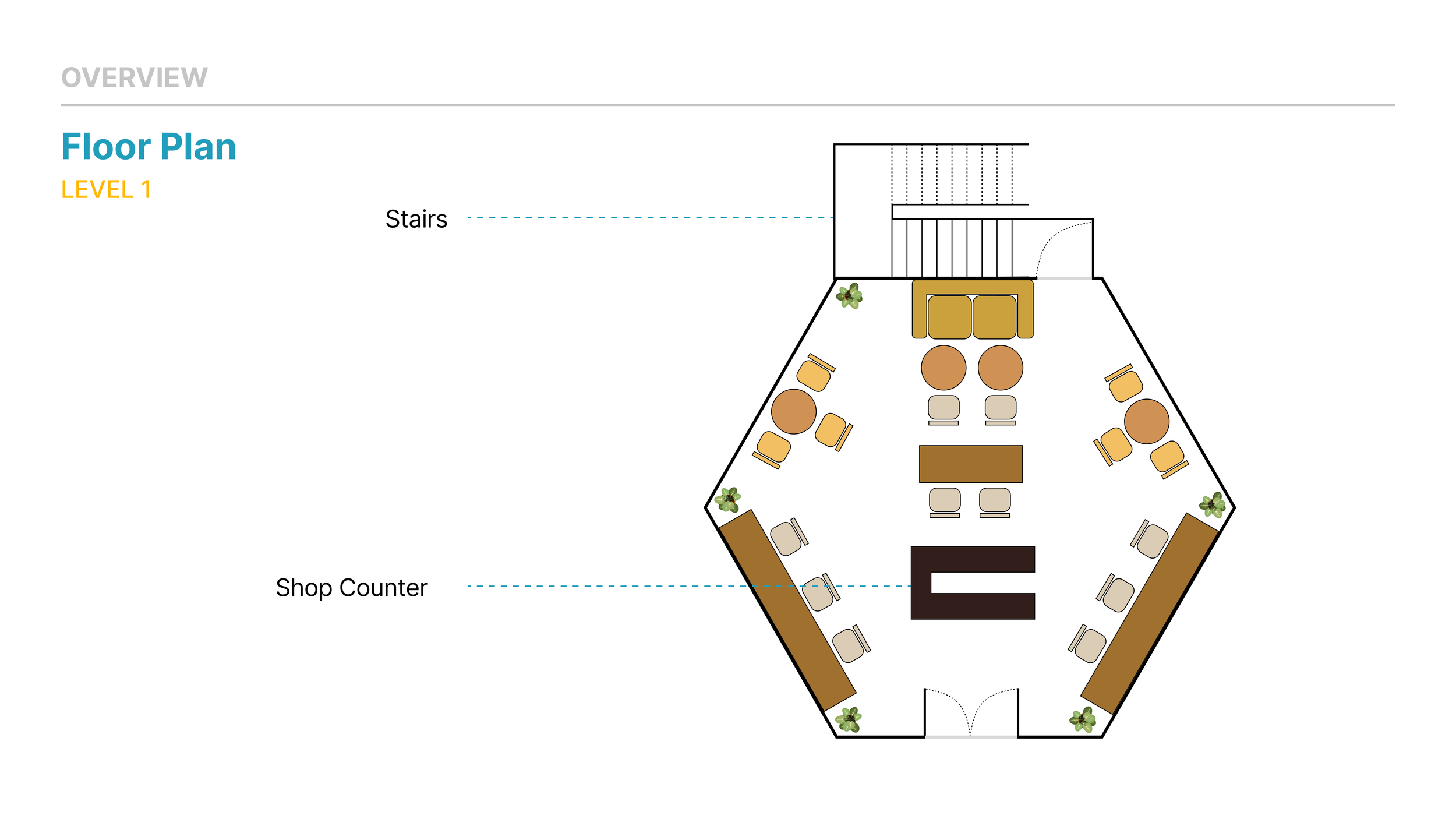
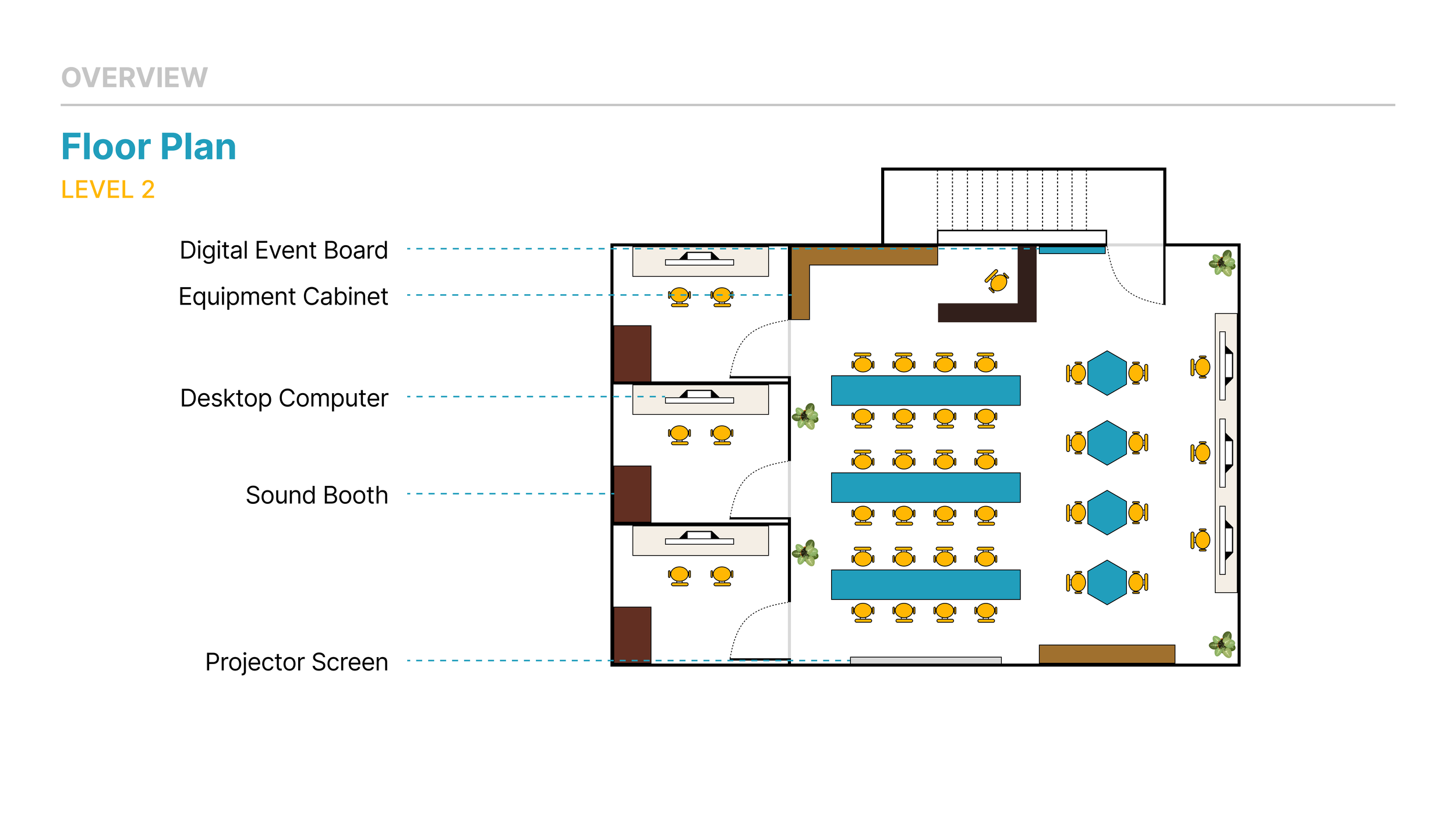
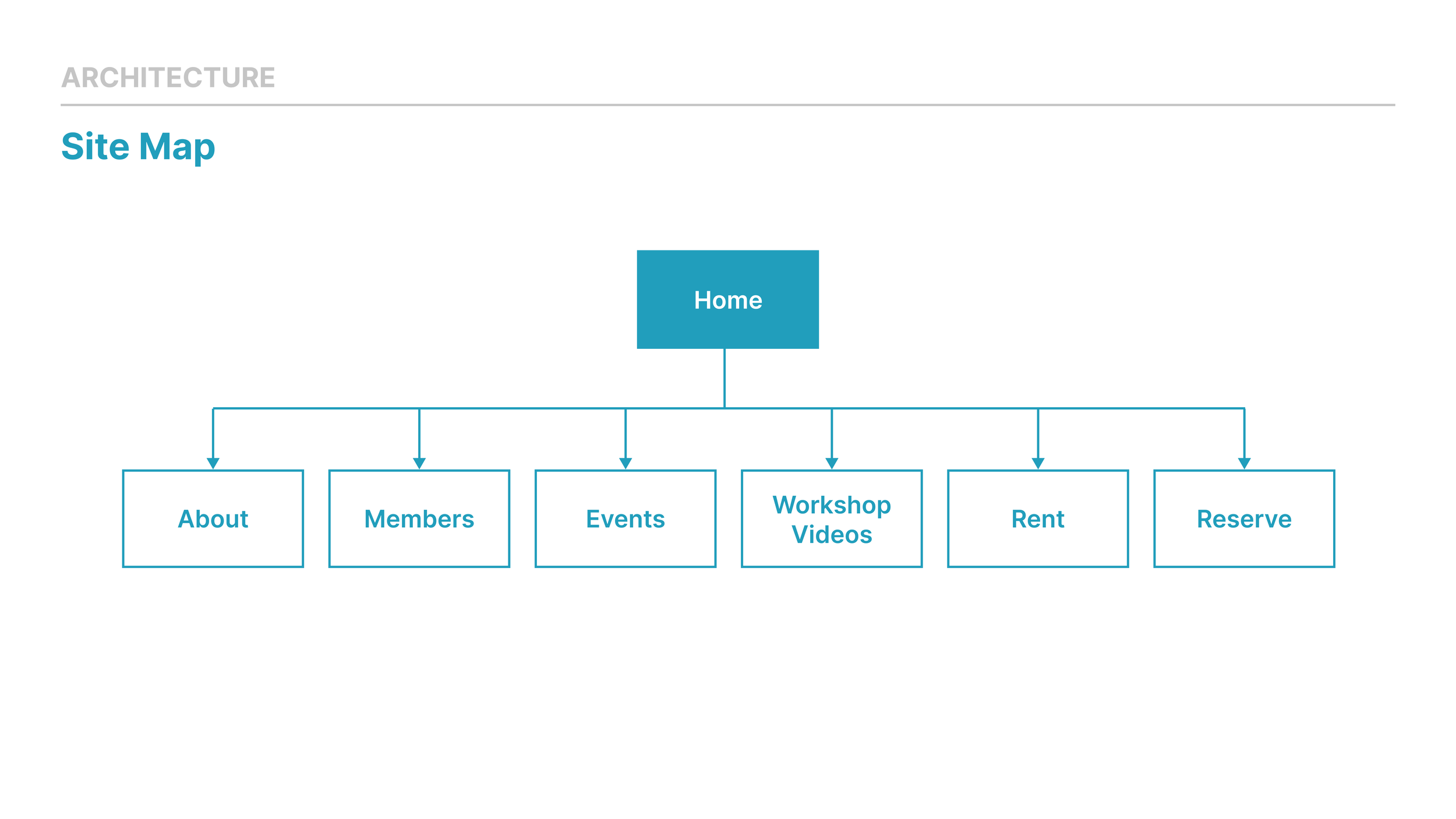
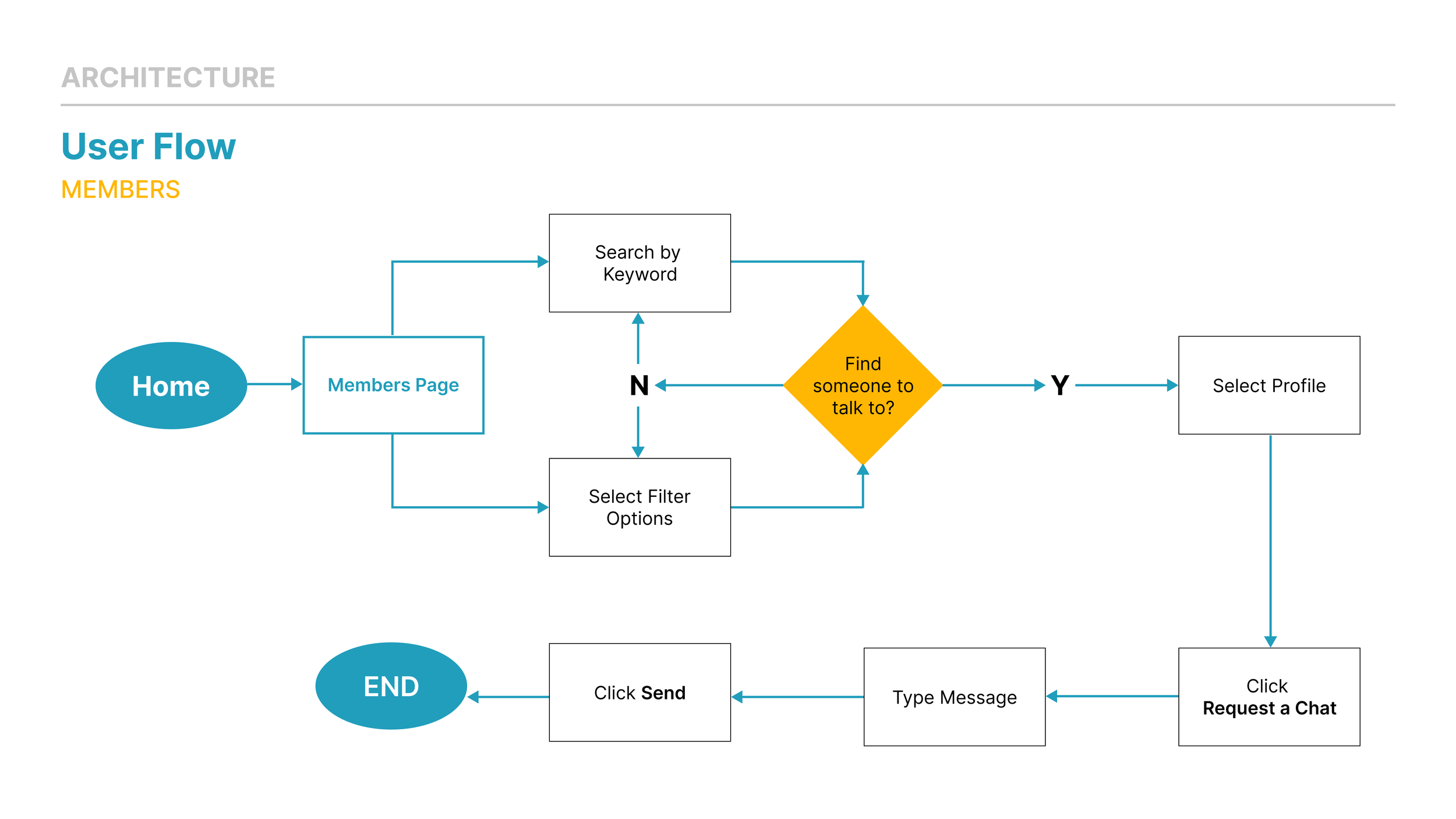
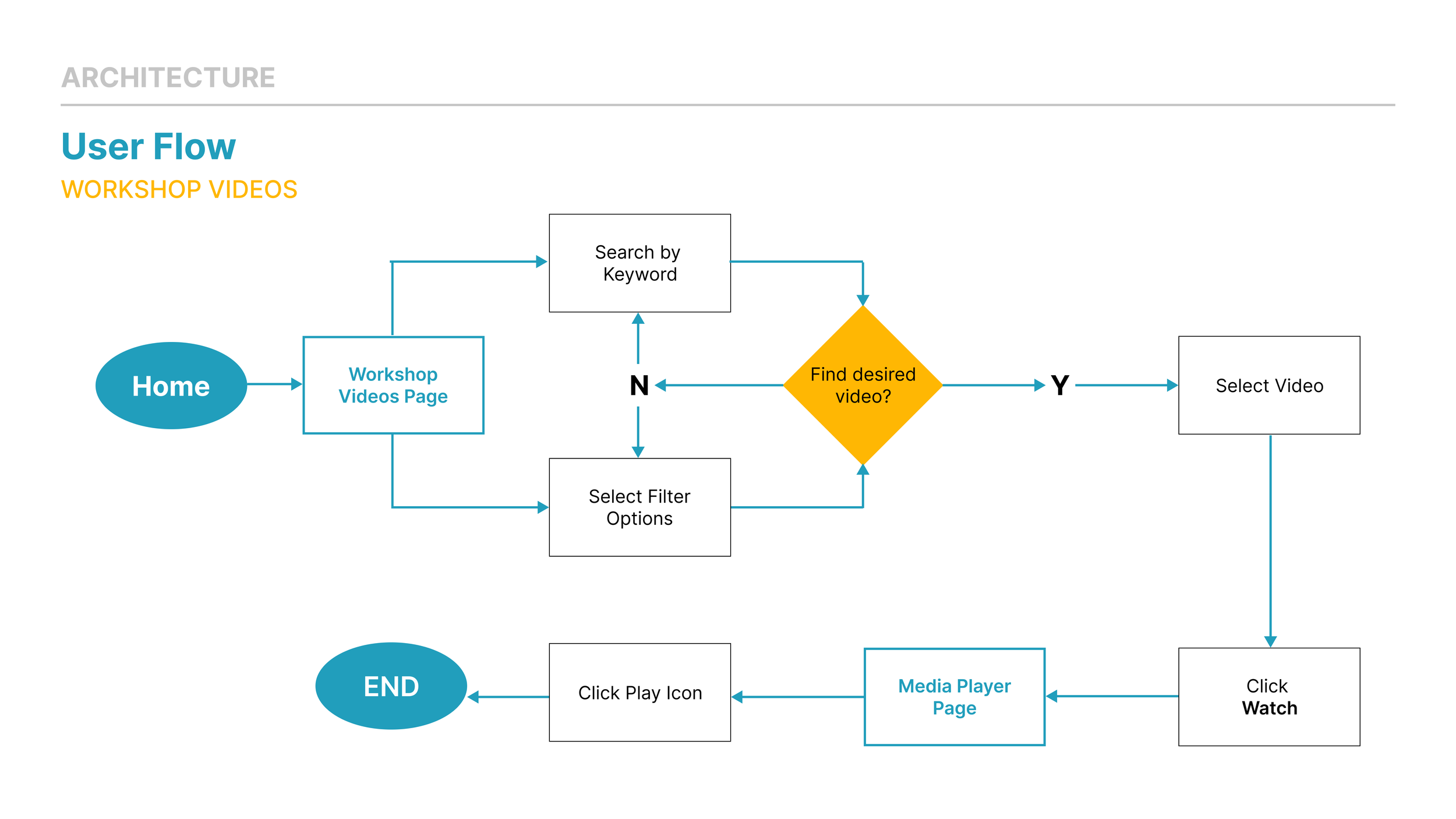
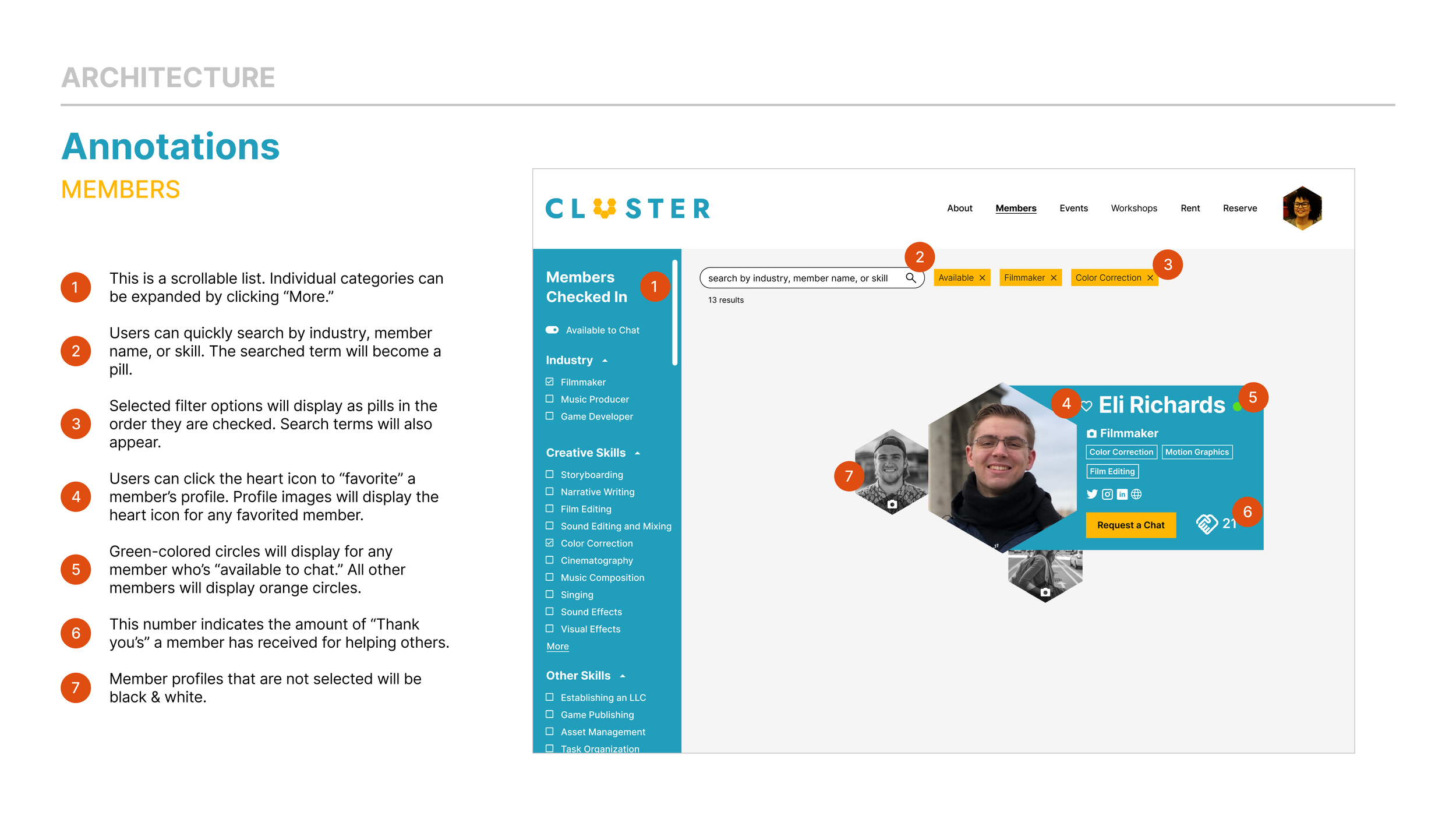
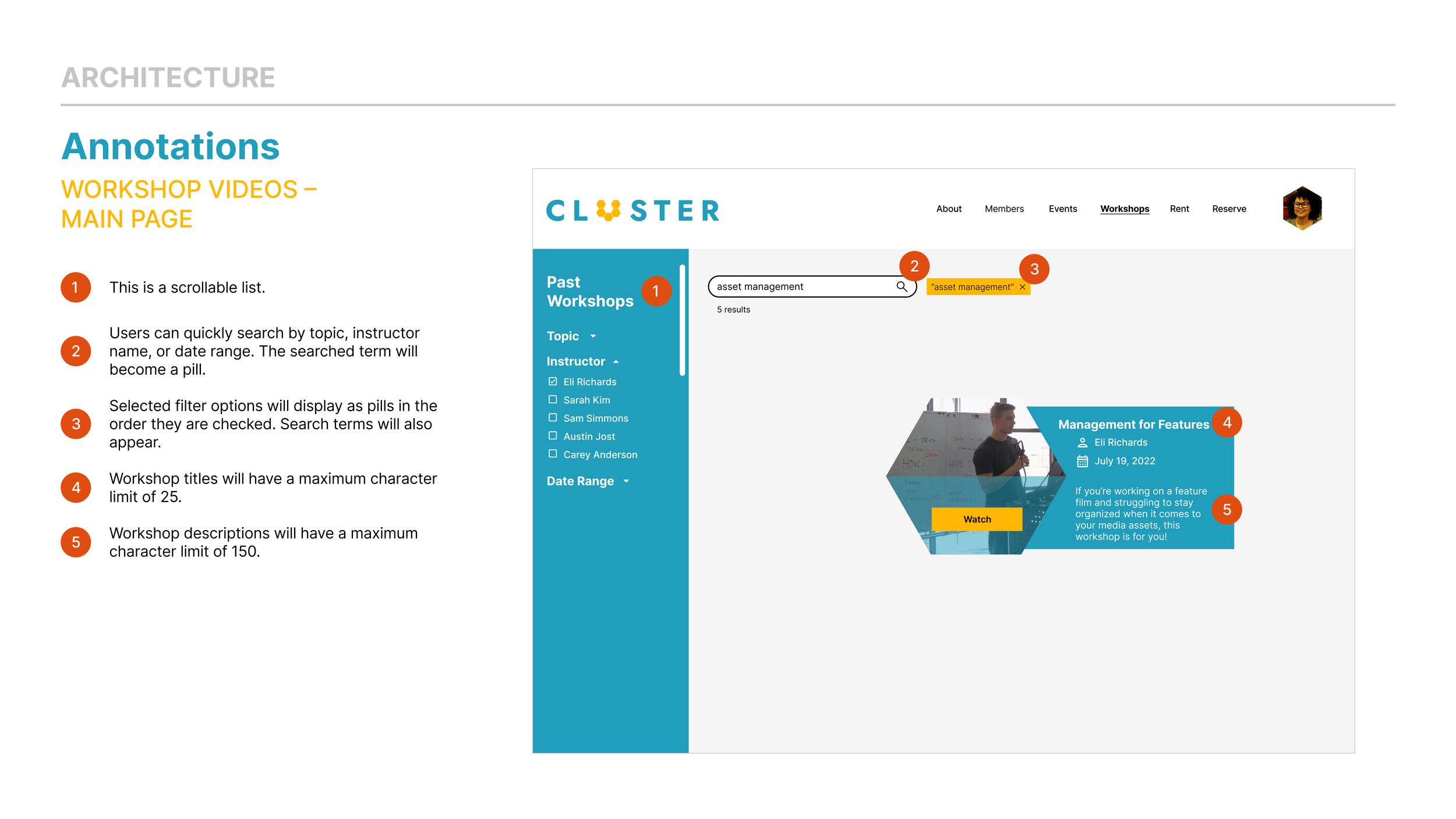
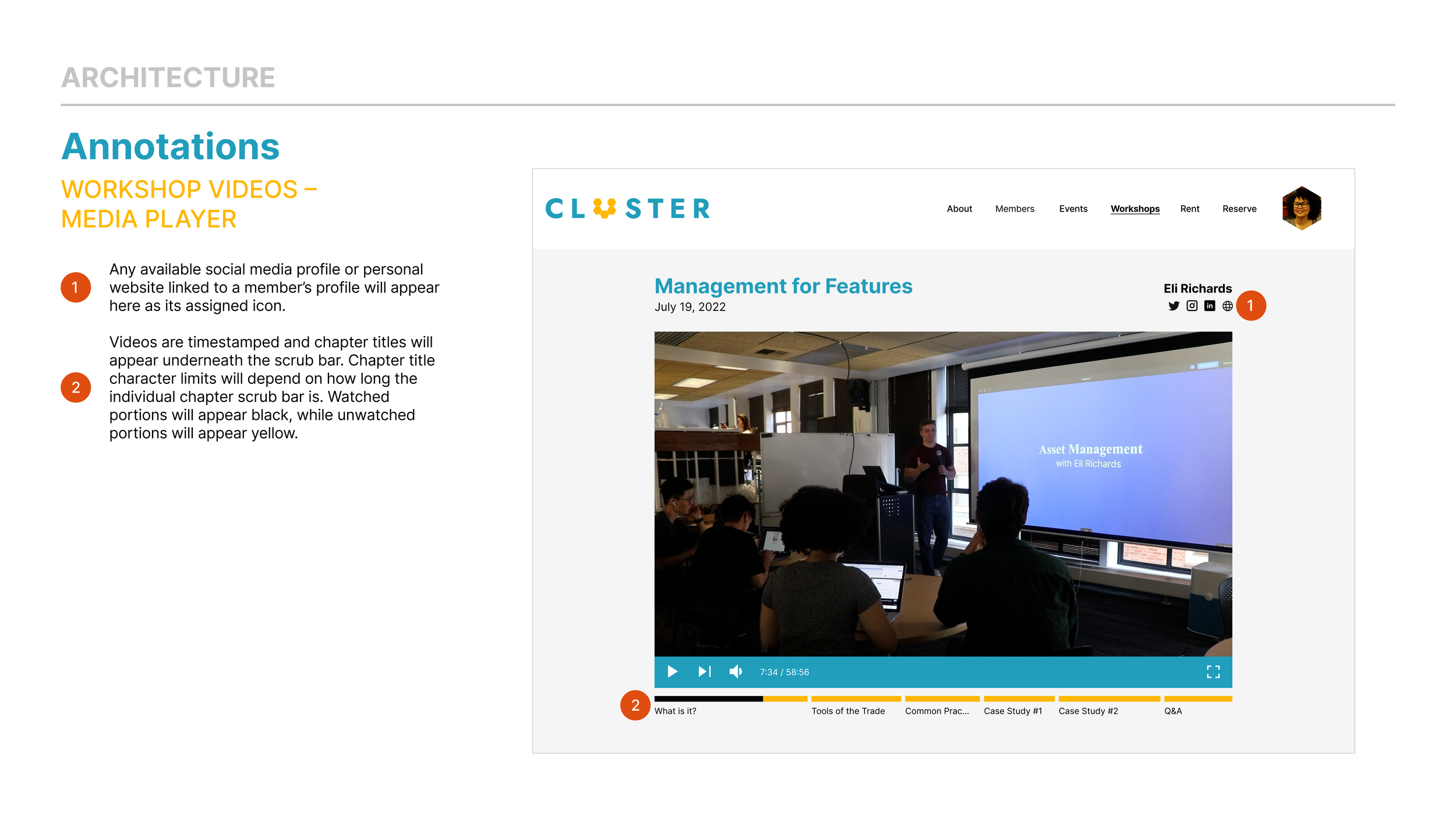
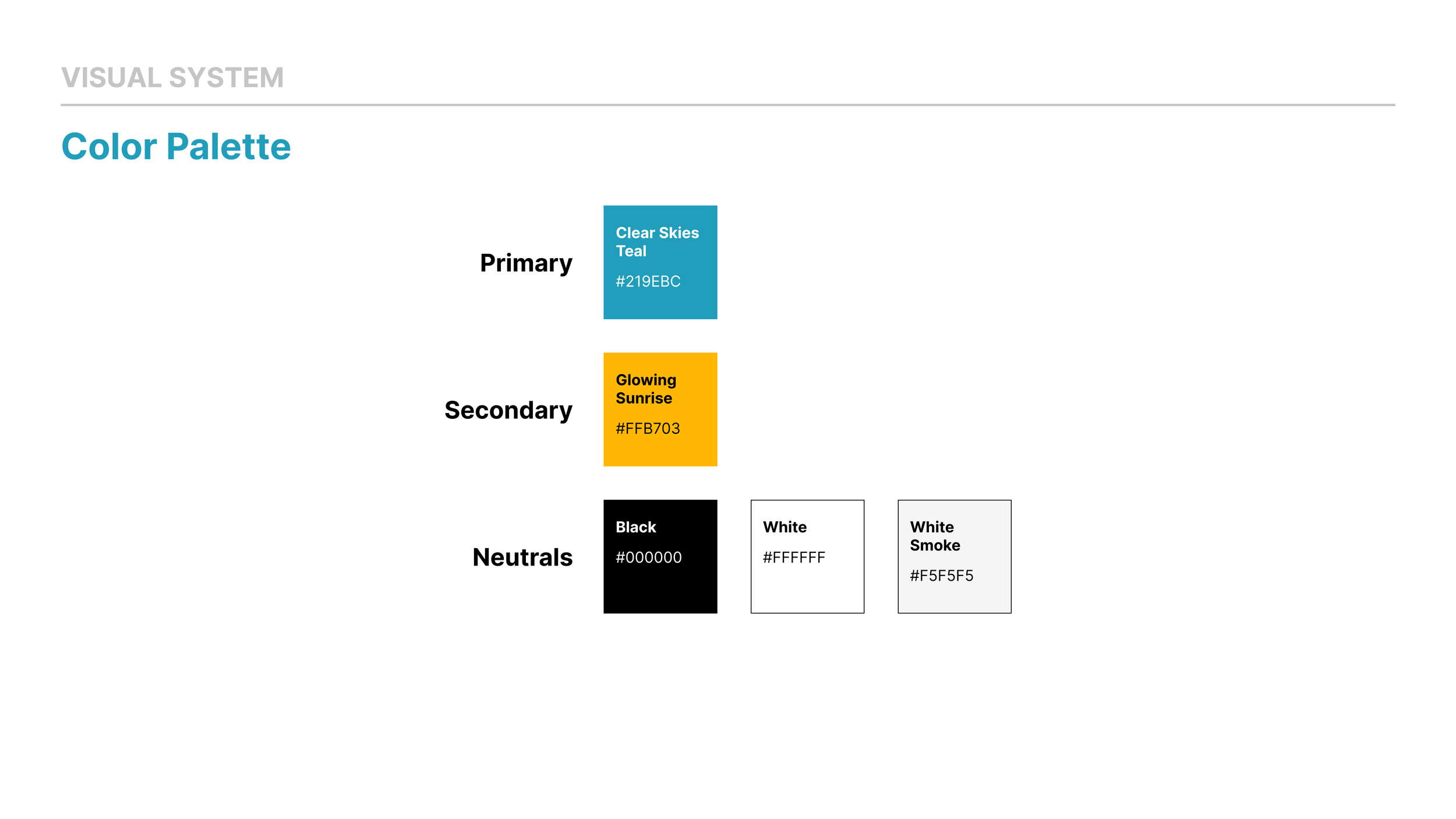
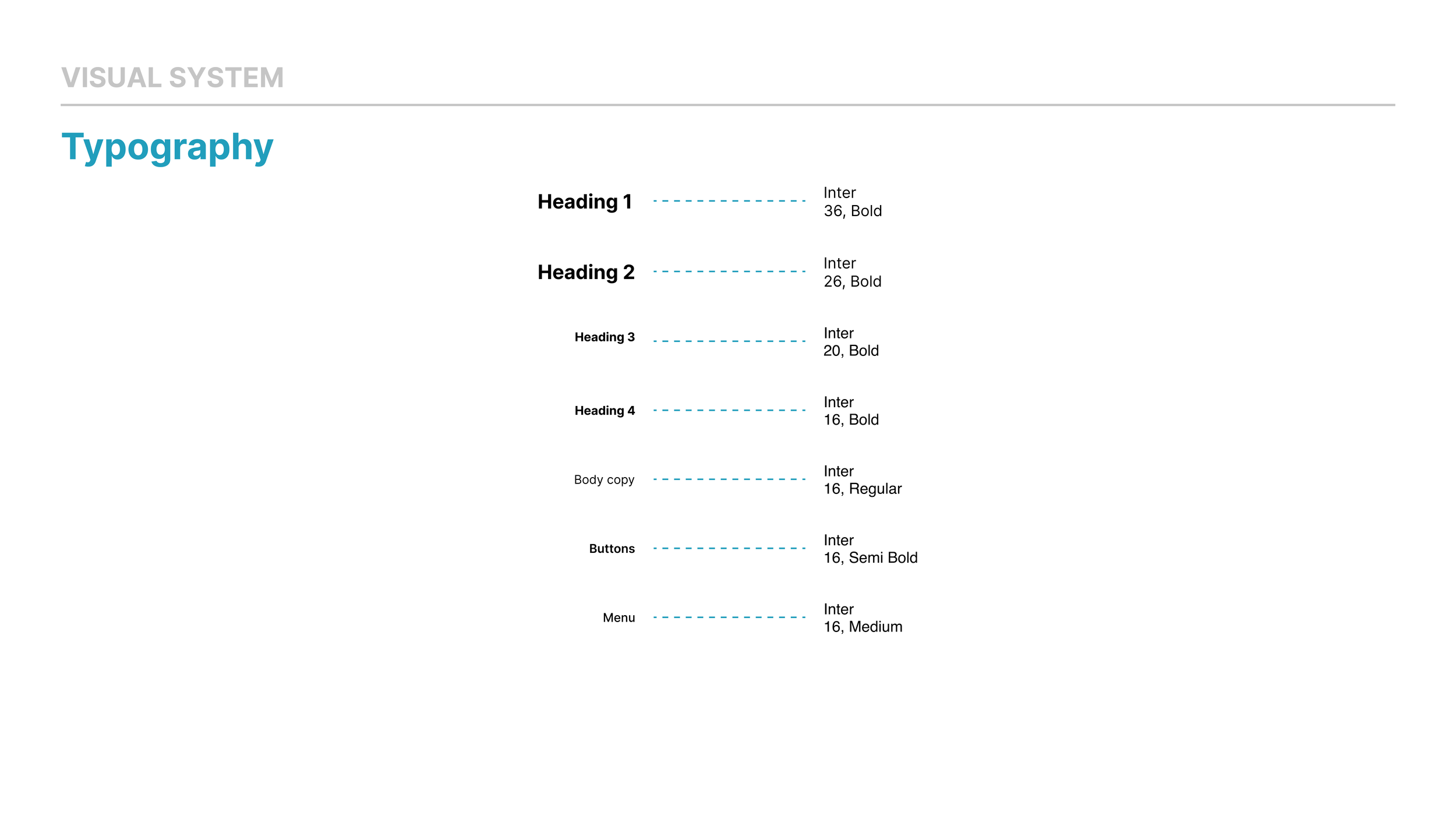
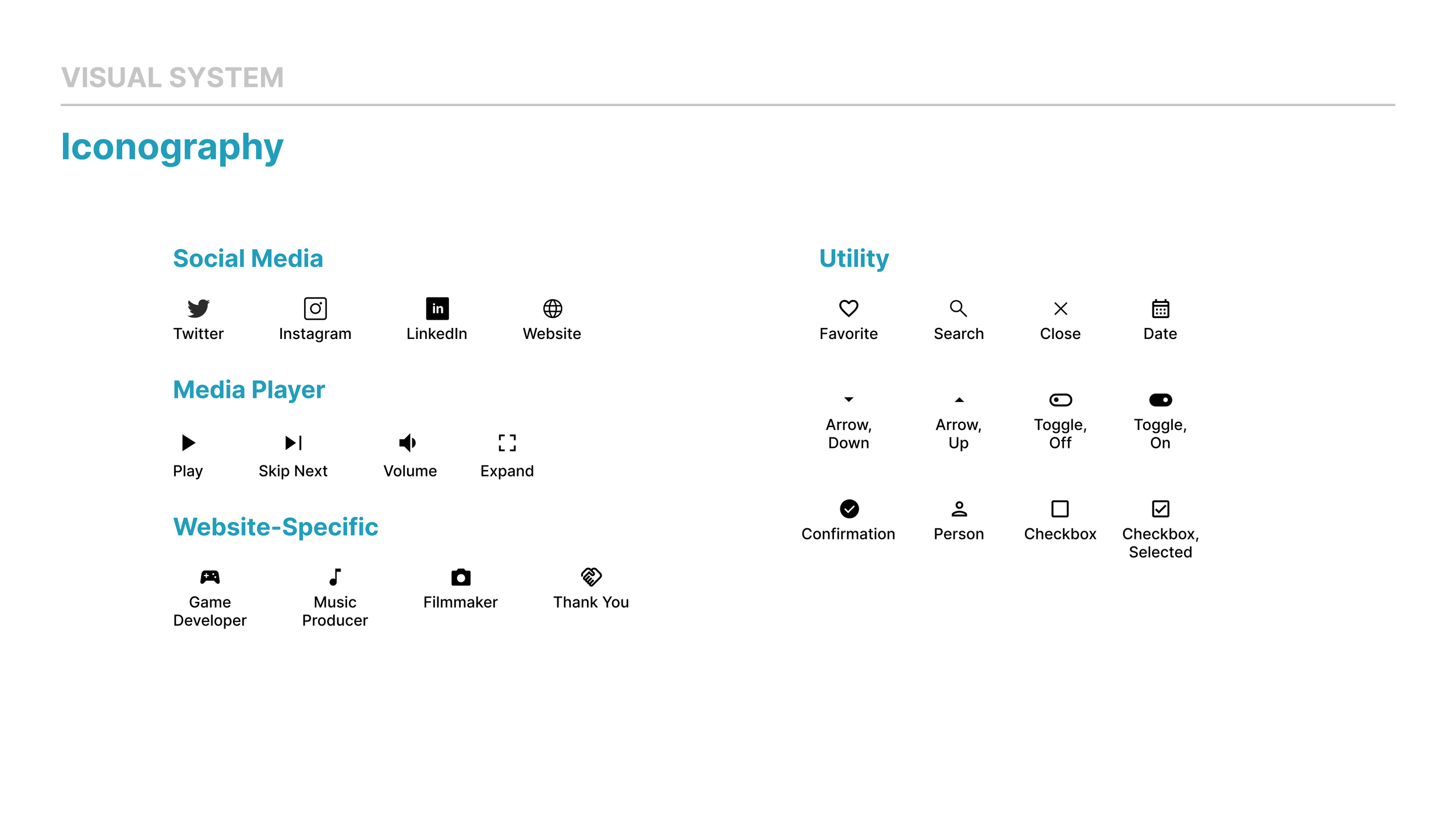
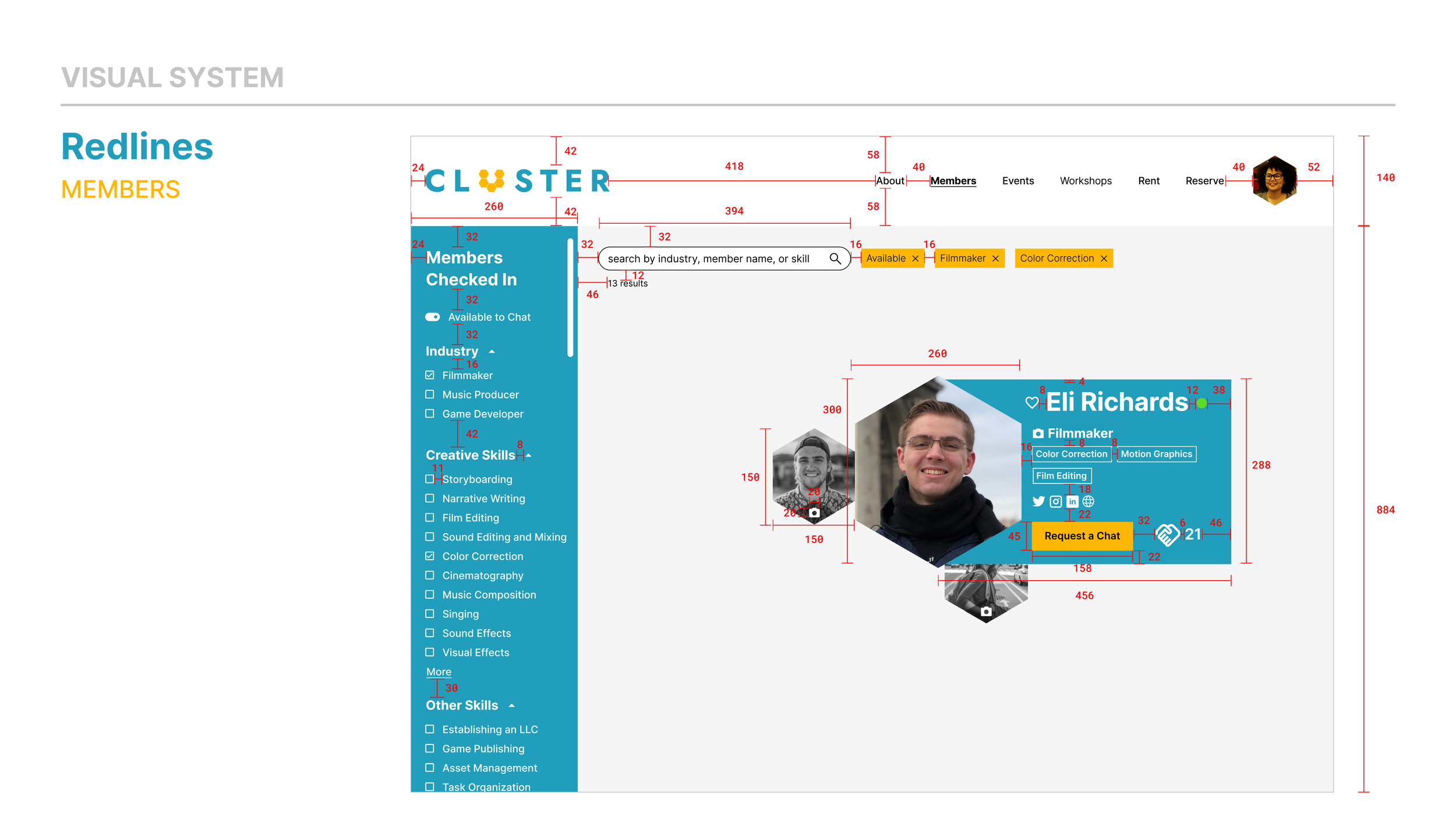
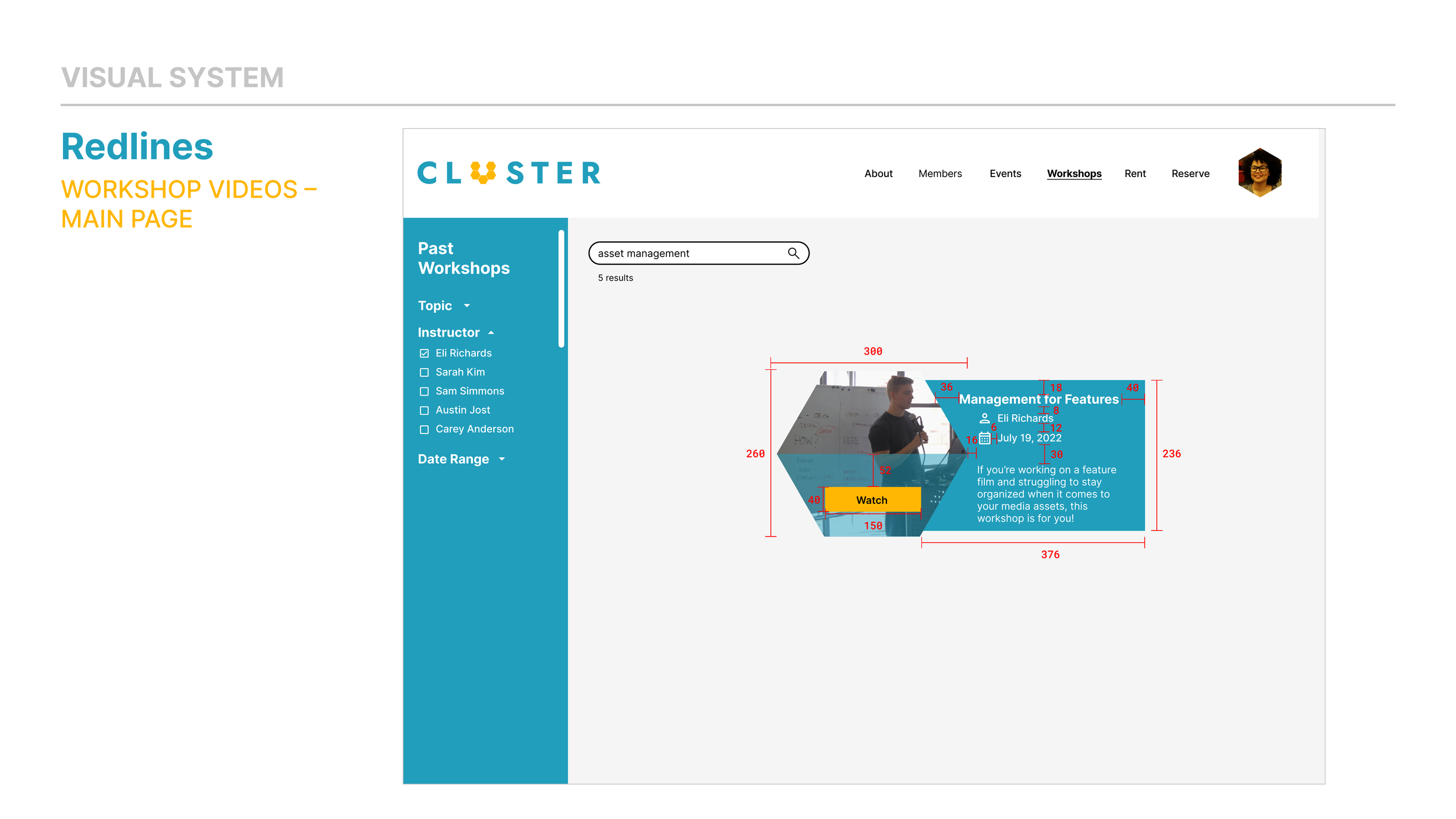
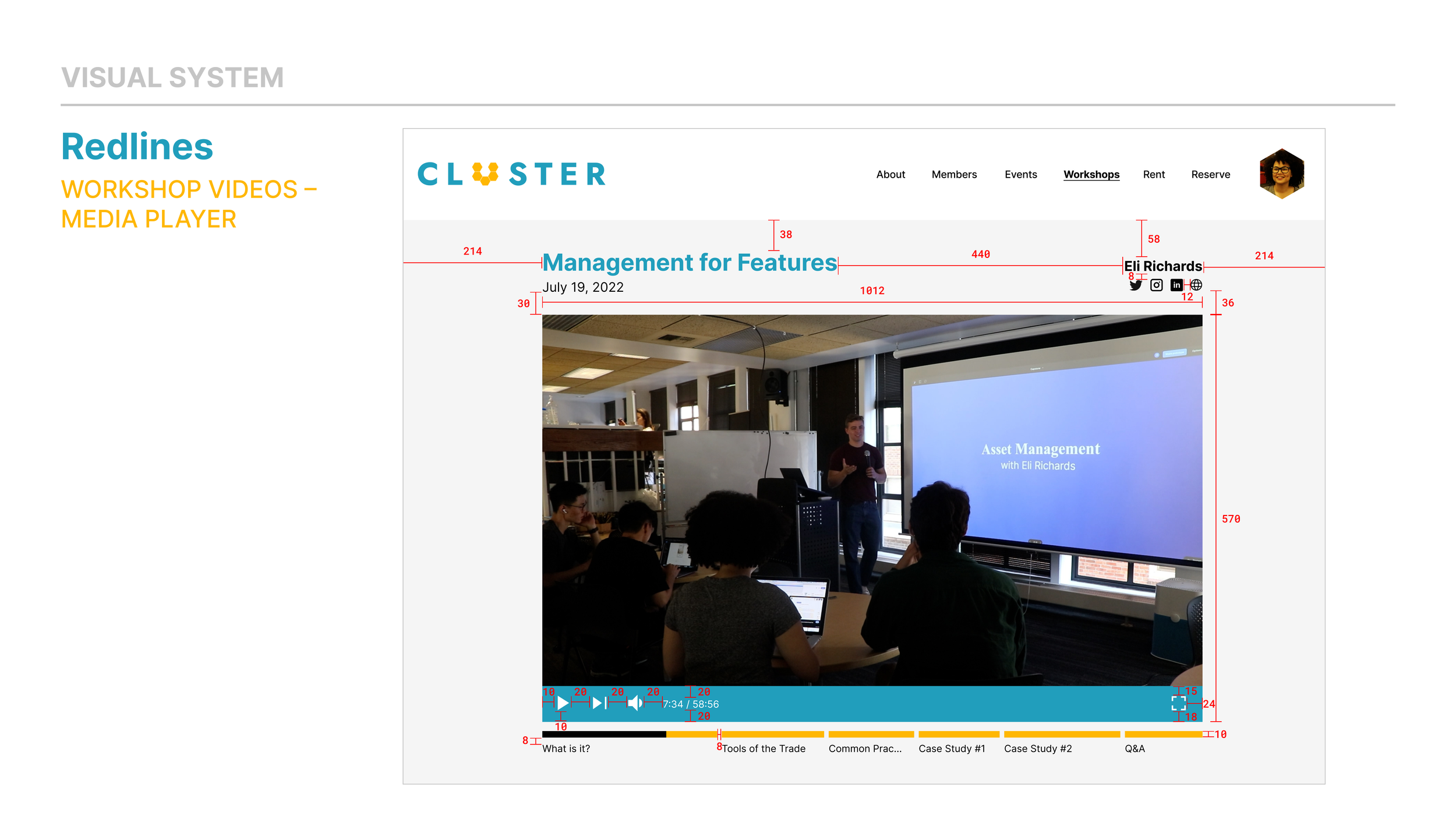
For Cluster’s design specifications, I developed a set of artifacts covering the website’s information architecture, user flows, visual system, and physical space. The sitemap established a simple navigation structure across six core sections, and the user flows mapped key tasks to identify the steps and decision points needed to complete them. I documented the visual system through a defined color palette, typography, iconography, and annotated wireframes with redlines specifying layout, spacing, and component dimensions. Finally, I created floor plans for both levels of the physical space to define the placement of workstations, equipment, and community areas.
future considerations
Conduct Field Studies: While our diary studies did provide some context into their environment, it relied on self-reporting once a day, which meant that some data was likely being filtered out. In the future, I would plan ahead for field studies in order to see participants perform their supporting tasks in real time in their own environments. It would have been enlightening to see disruptions, workarounds, and flow states happening in real-time.
Research Outcomes: While Cluster provides the infrastructure for independent creators to connect, share resources, and develop their skills, an important next step would be understanding whether these interactions translate into meaningful, lasting collaborations. Future research could explore what motivates creators to engage with one another, what barriers prevent them from participating, and how their needs differ across experience levels and creative disciplines.